Copyright © 2026 Wastefree Pty Ltd. All rights reserved.
Paper and cardboard recycling services for commercial and industrial waste management across NSW

Paper & Cardboard Recycling Services Sydney

Paper and cardboard are among the most common recyclable materials generated across commercial and industrial environments throughout New South Wales. Offices produce paper waste daily, while retail, logistics and warehouse operations generate significant volumes of cardboard packaging. 

Across NSW and greater Sydney, Wastefree delivers structured paper and cardboard recycling services that help businesses manage fibre-based materials efficiently, reduce landfill volumes and maintain consistent recycling performance. 

Our approach focuses on practical collection systems, appropriate bin selection and contamination control to ensure paper and cardboard remain suitable for recovery.

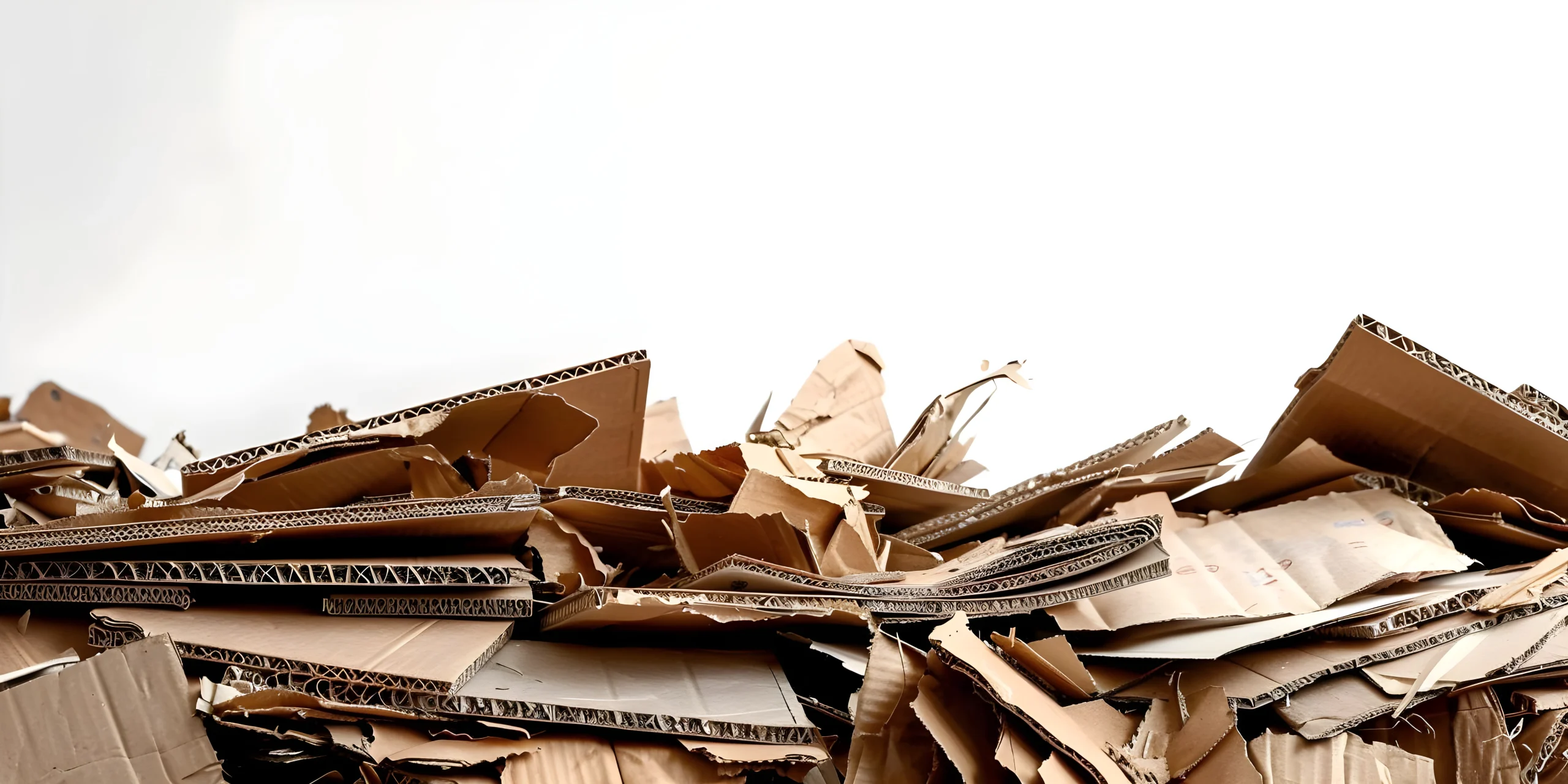
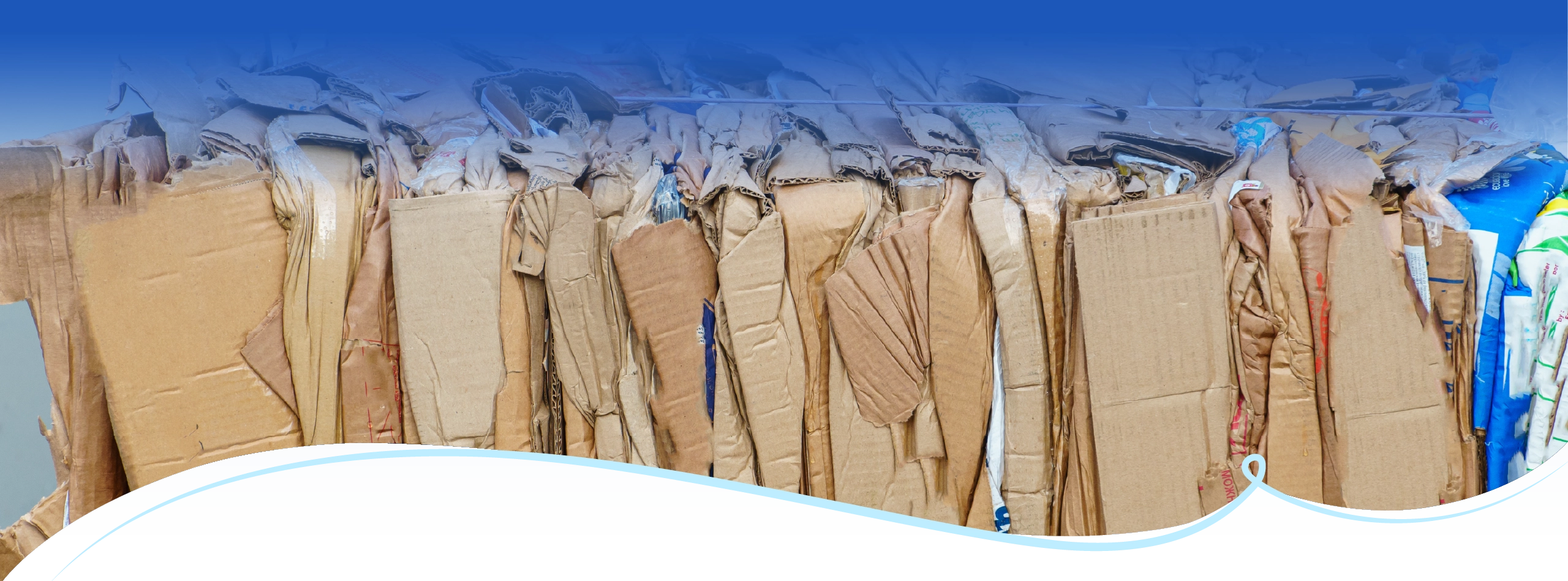
Stacked cardboard and paper waste materials for commercial recycling and fibre recovery management systems in NSW

Designing an Effective Fibre Recycling System

Recycling paper and cardboard successfully depends on maintaining material quality. Fibre that becomes mixed with food waste, liquids or general rubbish can quickly become unsuitable for recovery. 

A structured recycling setup typically involves: 

  • Identifying high-generation areas within the site 
  • Selecting bin sizes suited to expected volumes 
  • Establishing collection frequencies that prevent overflow 
  • Positioning bins to encourage correct separation 
  • Monitoring contamination and adjusting where necessary 

Collected fibre materials are transported to licensed recycling facilities, where they are sorted, graded and prepared for reprocessing into new paper and packaging products. 

Where Paper & Cardboard Recycling Is Most Critical

Fibre recycling services are commonly required across: 

  • Commercial office buildings 
  • Retail centres and supermarkets 
  • Warehouses and logistics hubs 
  • E-commerce fulfilment centres 
  • Manufacturing and wholesale facilities 
  • Educational and government premises 

Each environment generates paper and cardboard differently. Recycling systems must align with operational patterns rather than interrupt them. 

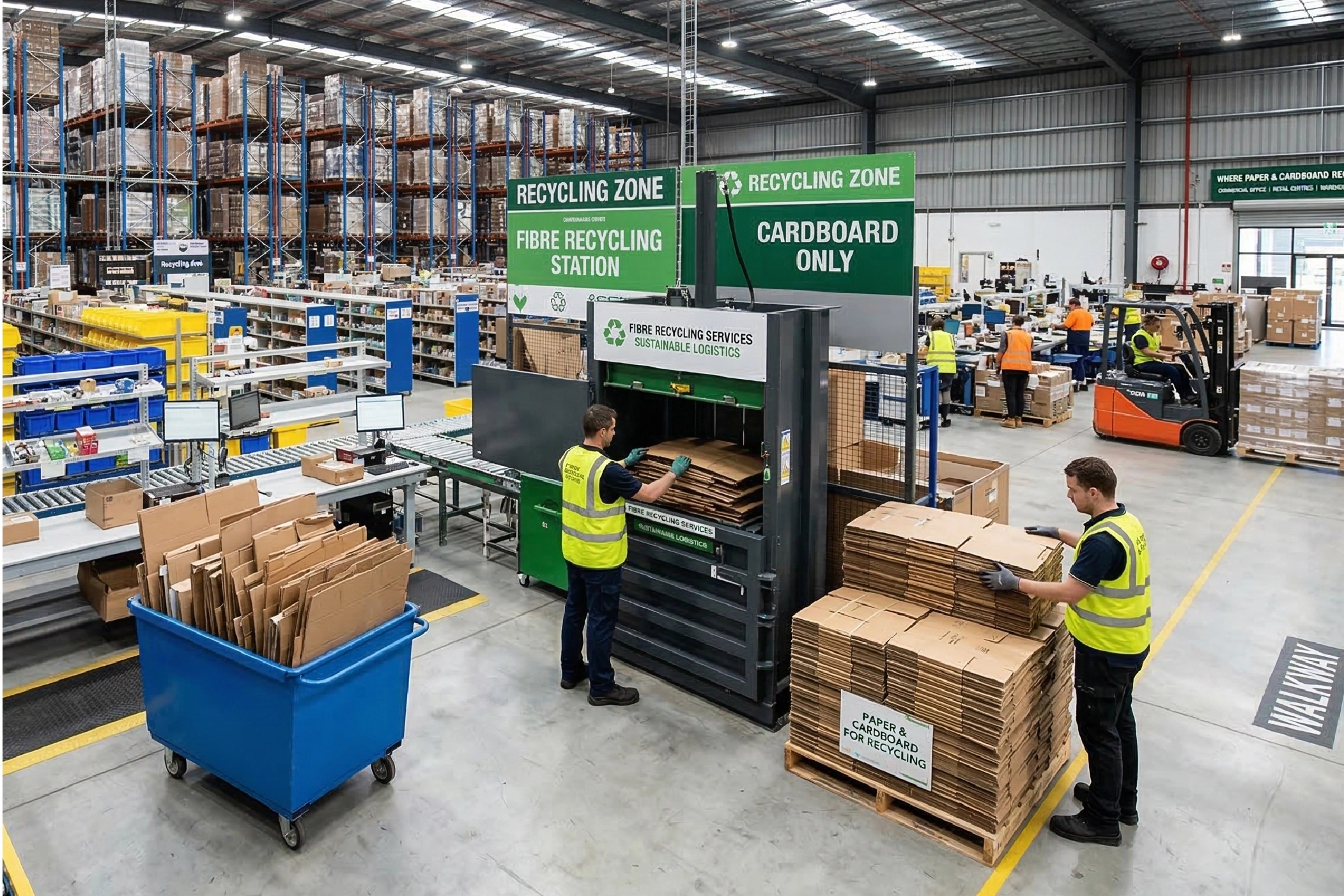
Warehouse cardboard recycling process with baling equipment for commercial and industrial waste management in NSW

Available Bin Options for Paper & Cardboard Recycling

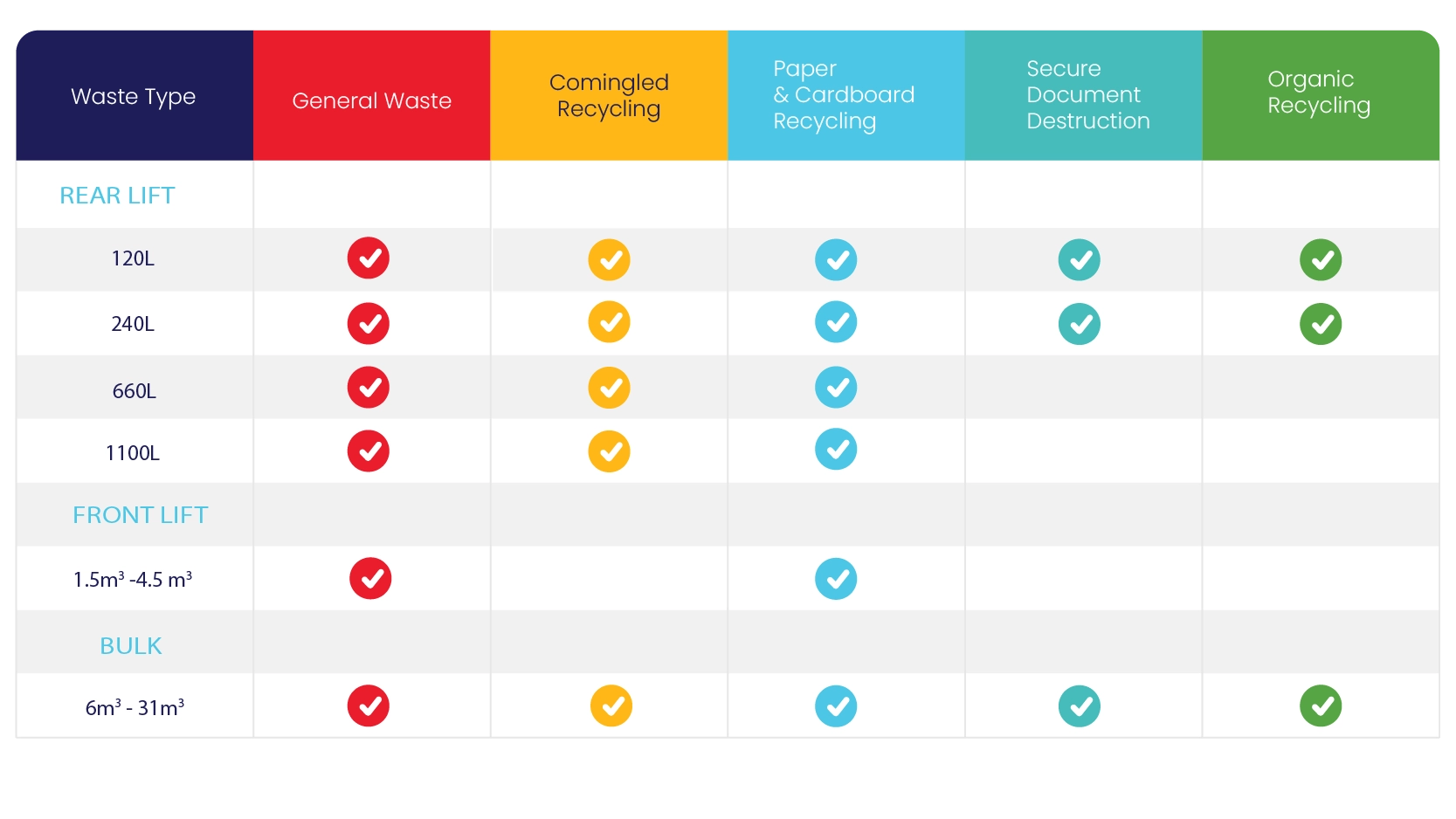
Container selection plays a significant role in maintaining recycling efficiency. Available options include: 

  • 120L and 240L rear-lift bins suited to small offices and low-volume paper waste 
  • 660L and 1100L rear-lift bins for consistent daily cardboard generation 
  • 1.5m³, 3.0m³ and 4.5m³ front-lift bins for larger commercial sites 
  • 6m³ to 30m³ hook-lift bins for bulk cardboard from industrial or high-output operations 

Bin configurations are determined based on site access, waste output and collection scheduling requirements. 

General waste bin icon for commercial and industrial waste management and disposal services

Paper Recycling

Waste types and collections
Wastefree commingled recycling bin with mixed recyclable materials for commercial waste management services

Comingled Recycling

Waste types and collections
General waste bin icon for commercial and industrial waste management and disposal services

General Waste

Waste types and collections
Wastefree secure document destruction bin for confidential paper shredding and compliance management

Secure Document Destruction

Waste types and collections
Wastefree secure document destruction bin for confidential paper shredding and compliance management

Organic Recycling

Waste types and collections
Paper and cardboard recycling services supporting key commercial and industrial sectors including warehouses and retail facilities

Operational and Cost Benefits of Fibre Recycling

When paper and cardboard are not separated effectively, recyclable materials often enter general waste streams. This increases landfill disposal, raises waste management costs and reduces overall recycling performance. 

A structured fibre recycling system supports: 

  • Lower general waste volumes 
  • Improved recovery consistency 
  • Cleaner waste storage areas 
  • Reduced contamination risks 
  • Alignment with environmental and reporting objectives 

The goal is not simply to collect recyclables, but to implement a system that remains workable over time. 

Waste-Free managing general waste disposal in NSW through licensed facilities, ensuring EPA compliance and responsible environmental handling.

Processing Standards and Compliance

Recovered paper and cardboard are delivered to licensed facilities that operate under EPA and industry guidelines. These facilities process fibre materials using established grading and re-manufacturing methods. 

Handling and transport procedures are structured to help maintain material quality and ensure compliance with environmental requirements throughout the collection cycle.

Reviewing Your Food Waste Recycling Setup

Changes in packaging volumes, seasonal demand or business growth can affect how fibre waste should be managed. Reviewing bin sizes, placement and collection frequency periodically helps maintain efficiency and avoid overflow or contamination issues. 

If your organisation operates in NSW and is evaluating its paper and cardboard recycling setup, a structured assessment can help identify practical improvements.

TOP